



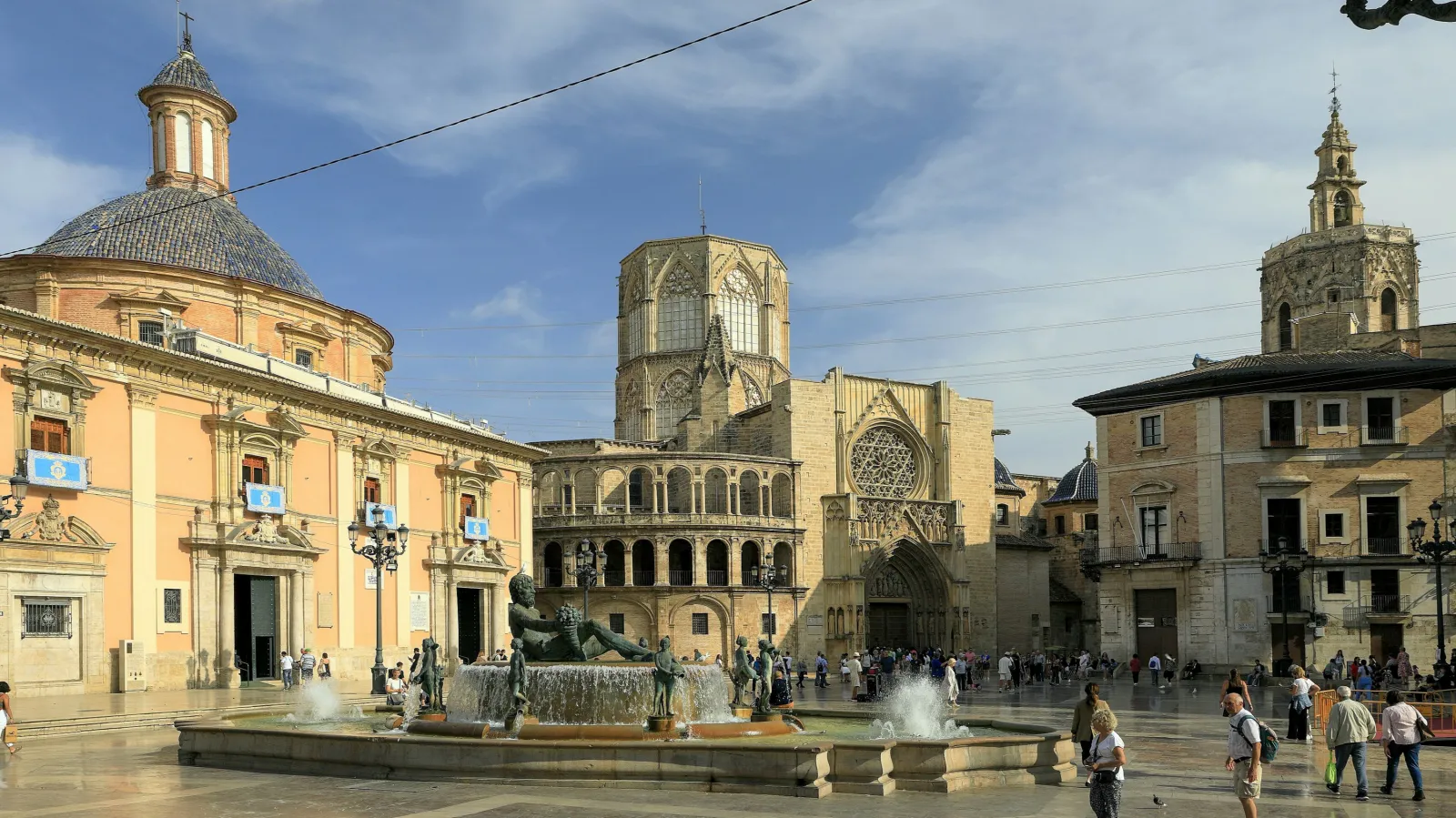
At two in the afternoon on a March day, nothing else can be heard in the Town Hall Square: the mascletà is felt in the chest before the ears. The rest of the year, that very same square is just a place you pass through. Valencia works like this: it takes what it has and turns it into something else. Fire into a festival, commerce into architecture, rice into a family argument. This is our suggestion of what to see in Valencia: a walking route through the old town, stop by stop. And if you fancy doing it while playing, the escape room in Valencia From Escapeo, «Valencian style» turns the walk into an investigation into that custom.
What to see in Valencia: three subjects and the very same way of doing things
It's about 3 km through the historic centre, from the fountain in the Plaza del Ayuntamiento to the Serranos Towers. The eight stops are not listed here in the order of the route, but rather grouped by what Valencia does with each thing.
The burning city: Town Hall Square and Serranos Towers
The square where the route starts is the setting for the mascletà: during March, every day at 14:00, the gunpowder is set off to be heard, not to be looked at. At the other end of the route, the Serranos Towers still act as a gateway. They were built between 1392 and 1398 as the main access to the walled city, served as a prison for nobles between the 16th and 19th centuries and guarded the paintings of the Prado Museum during the Civil War. Today they open something else: on the last Sunday of February, the Crida is proclaimed from their façade, marking the start of the Fallas.
The city that carves itself: Dos Aguas, the Lonja and the Cathedral
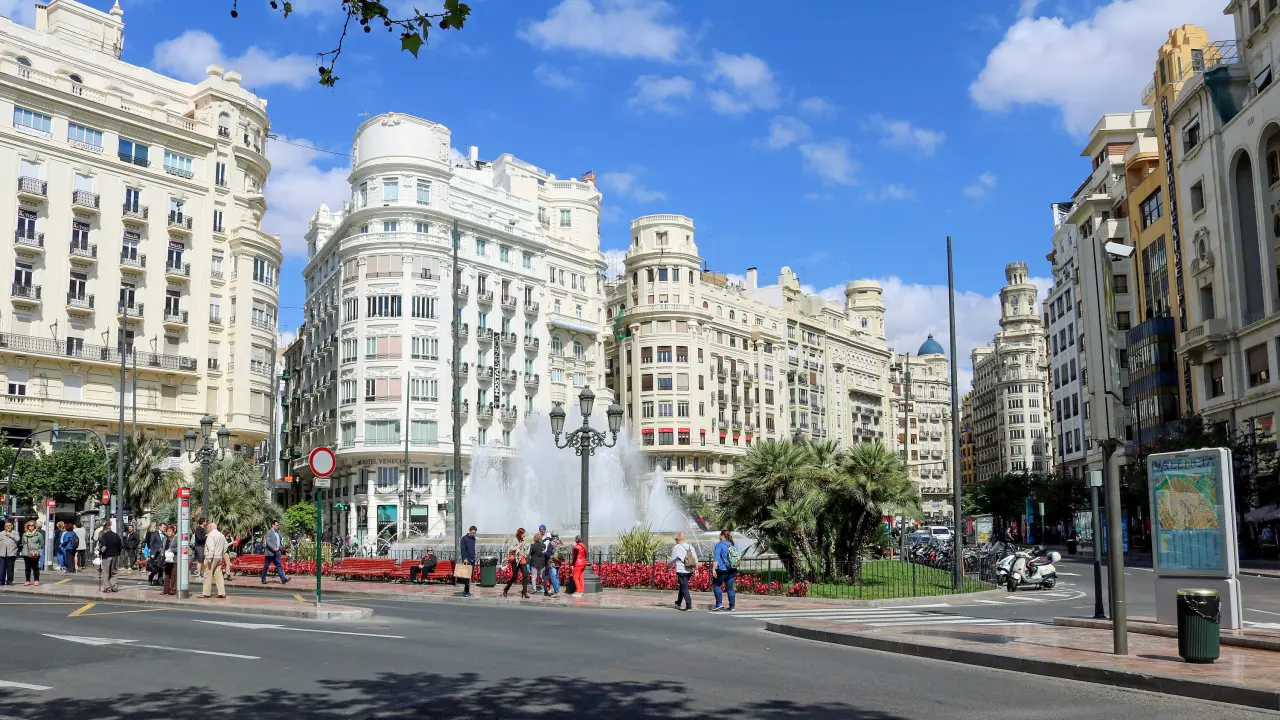
The Palace of the Marqués de Dos Aguas carved its doorway in alabaster from the Niñerola quarries, owned by the marquisate itself: two Atlantes tip respective pitchers of water to explain a noble title in stone. Five minutes away, the Silk Exchange built a hall of columns twisted like palm trees for trade, with a Latin inscription running around the entire room reminding merchants that honest business also leads to heaven. In the Cathedral, Romanesque, Gothic and Baroque styles coexist, and a side chapel holds the cup that tradition identifies with the Holy Chalice. Next to it stands the Miguelete: an octagonal floor plan and 207 steps.
The shared city: Central Market, Redonda Square and La Nau
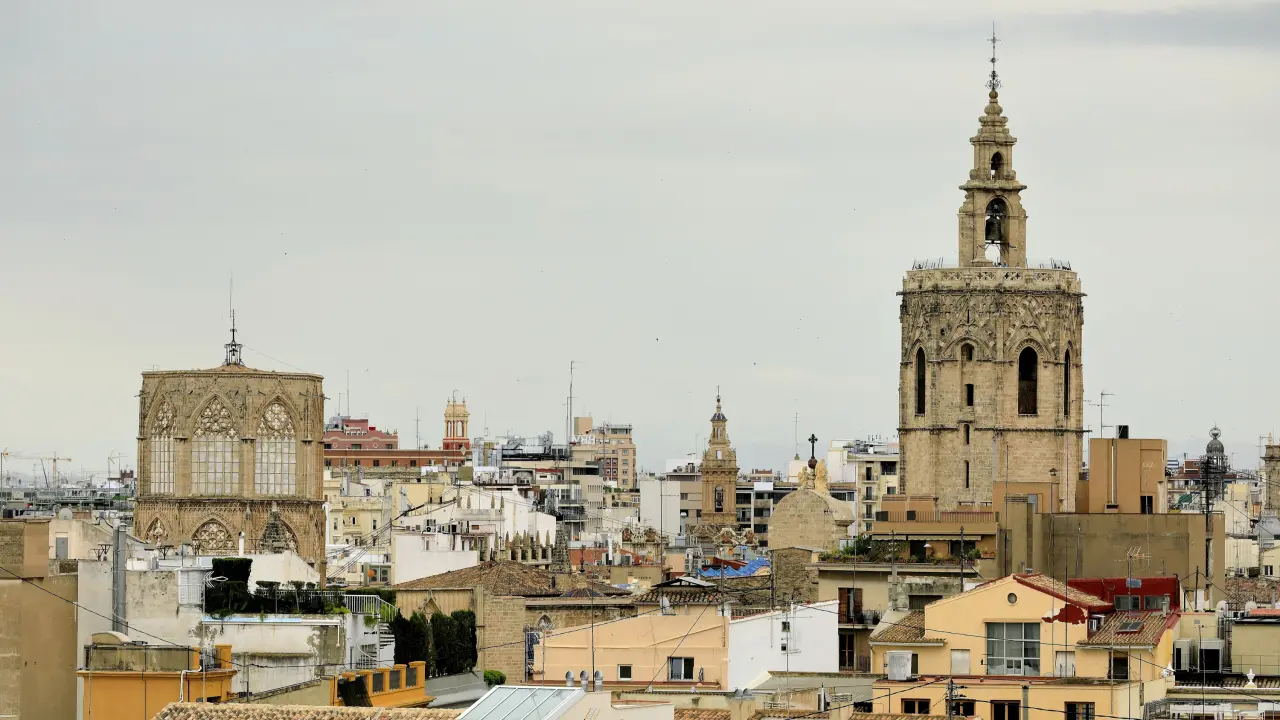
The Central Market opened in 1928 and remains a market, not a set: iron, glass and ceramics beneath a 30-metre dome, open from Monday to Saturday until 14:00. Two streets away, the Plaza Redonda is a 37-metre circle hidden inside a city block; it was laid out in 1840 on the site of the former slaughterhouse and locals call it el Clot, the hole. And La Nau, home of the Universitat de València since the late 15th century, preserves the courtyard where Valencia has spent five hundred years doing the same thing with knowledge as it does with food: sharing it out.
«In the Valencian manner»: the route turned into a game
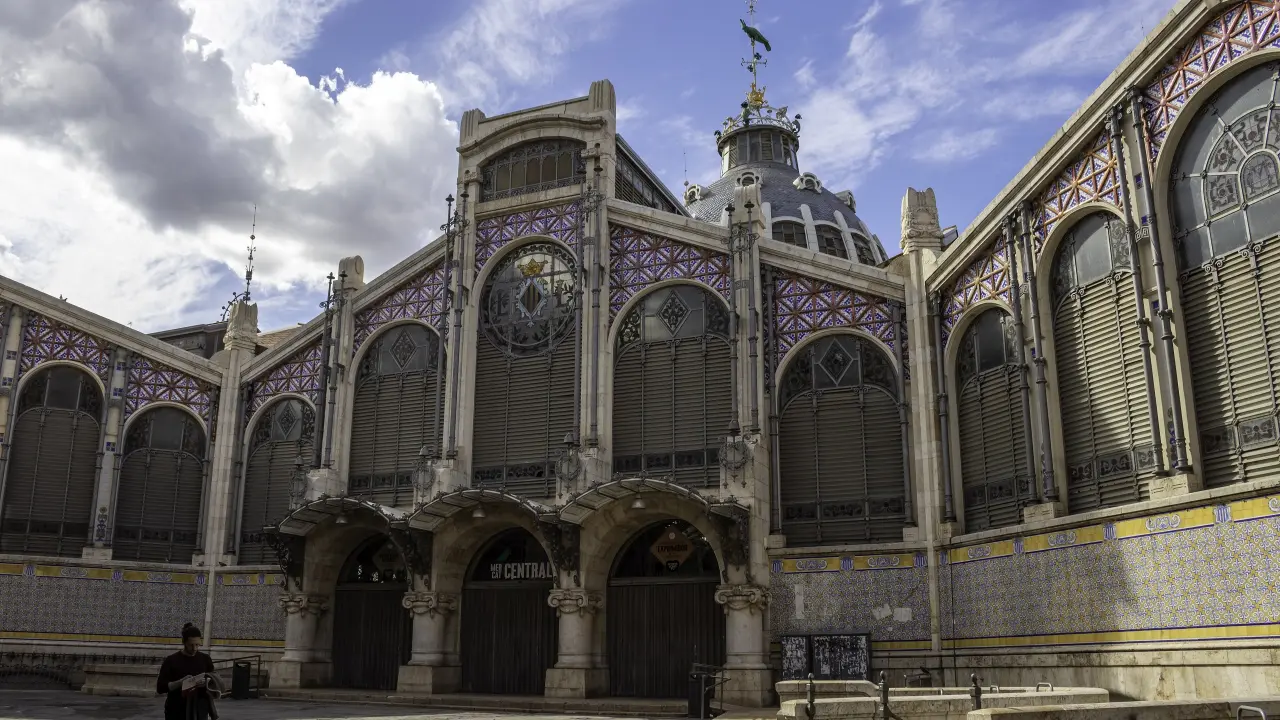
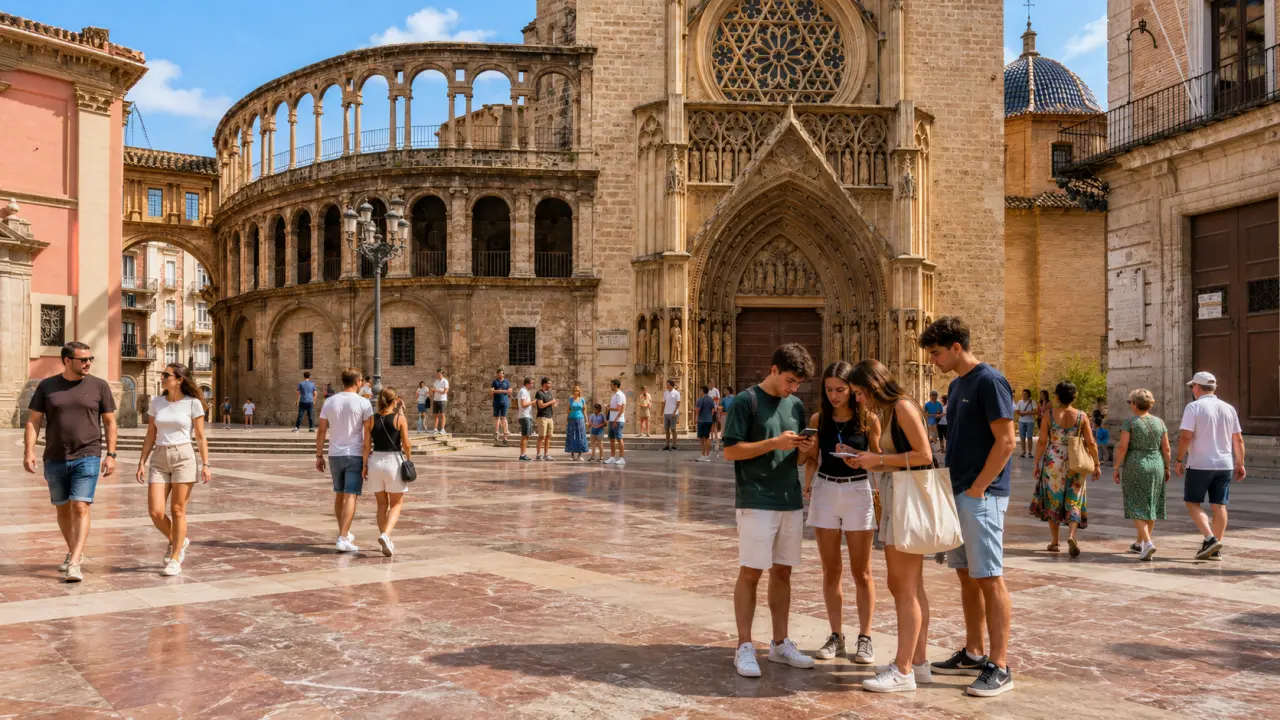
«A la manera valenciana» is the gamified walking tour What an escape room they've put together on this route. It's played from your mobile phone, with Kei as your guide: a traveller who arrives convinced that a city's character can be read in its monuments, only to discover at the very first stop that what's interesting here isn't what is preserved, but what is done with it. There are eight locations, from the fountain in the City Hall Square to the Serranos Towers, and at each one you have to look closely, connect the dots and decipher the clues. Exactly what is asked at each point won't be revealed here, for obvious reasons. As for the end, one idea can be shared: when Kei looks back, the Fallas, silk, rice and the bat are no longer separate things.
The detail almost nobody looks at
At the top of the Dos Aguas façade, there is a niche with a statue of the Virgin of the Rosary. What is striking is not the carving itself, but its cover: a sliding door that made it possible to hide her. When the marquesses were in the palace, the image remained in full view of the neighbourhood; when they left, it was closed. A system for announcing who was at home, carved into the most ostentatious building on the street.
How it works and how long it lasts
Everything happens in the mobile browser, so there's nothing to download or any appointment to be late for.
- It lasts an hour and a half on average, with no strict time limit: you can stop for lunch and carry on afterwards.
- It costs €15 per person and the access code arrives by email after purchase, with no expiry date.
- Geolocation unlocks each trial upon arriving at the site, so it has to be played in Valencia.
- It is played solo or in teams, by syncing the group's mobile phones, and there is a leaderboard at the end.
- If something gets stuck, you can ask for hints or skip the test in exchange for a penalty.
It is worth checking before booking the details of the experience.
What time is best to leave
If you can choose a day, choose Thursday. At 12:00, at the Apostles' Door of the Cathedral, the Water Tribunal meets: eight huerta wardens, black blouse, oral trial in Valencian and unappealable rulings. It has been UNESCO Intangible Cultural Heritage since 2009, it doesn't last long and it's not a performance, so it's best to be there before the time. In summer, best at first thing: between the Market and the Cathedral there is little shade.
A stop halfway along the route
The natural place to stop falls between the Plaza Redonda and the Cathedral: horchata with fartons in one of the historic horchateria shops in the Plaza de Santa Catalina. If you pass by at midday and prefer to eat, the Central Market has bars inside and the paella ingredients on show, which is the quickest way to understand why here a recipe is discussed like a family matter. The game is in no hurry: you stop and then carry on.
Valencia doesn't keep: it transforms
By the end, it is hard to keep seeing the route as just a list of eight monuments. The gunpowder, the alabaster, the silk, the rice and the bat on the coat of arms are all the same operation repeated over centuries: taking something, shaping it and turning it into a custom. That is what doing things the Valencian way is all about. If you want to tour the old town with that idea in mind, book your place in the escape room in Valencia: «Valencian style».
Image credits: Central Market facade, photo by Bene Riobó. Miguelete and Plaza de la Virgen, photos by Falk2. Both from Wikimedia Commons under licence CC BY-SA 4.0, cropped and resized. Town Hall Square, photo by Jeffrey Beall (Wikimedia Commons, CC BY 4.0), cropped and resized. AI-generated player image.