



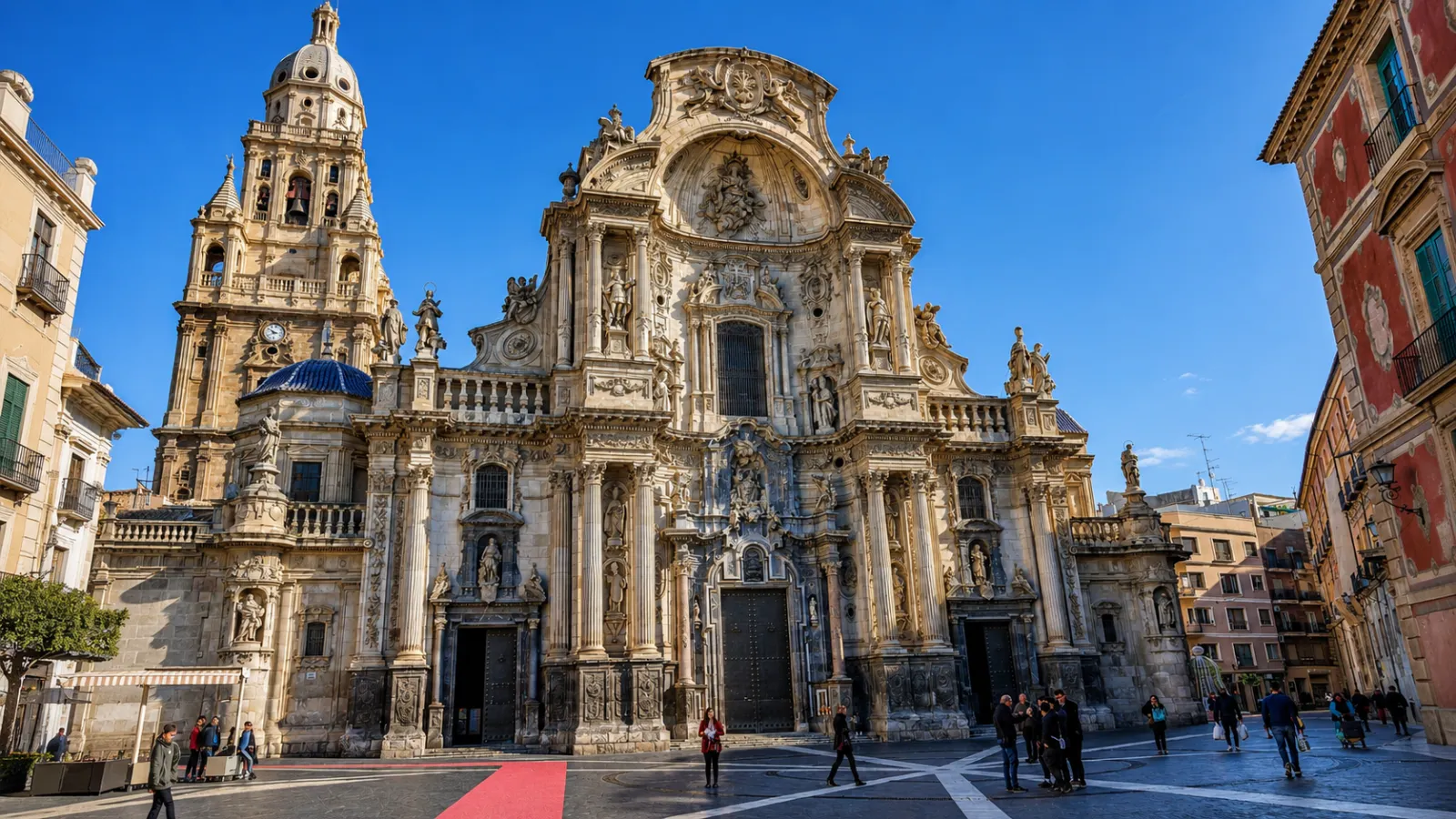
The façade of Murcia Cathedral looks like a single piece, but it is not: Gothic, Renaissance, Baroque and Neoclassical coexist upon it, as though four generations had written over the previous one without erasing anything. That is the first sign that Murcia is not one city, but several superimposed. That is why deciding what to see in Murcia it is actually choosing which layer to look at: on this walking route through the historic quarter we explore the ones you can see and the ones left underneath. And if you fancy walking them while playing, the escape room in Murcia Escapeo's «The Three Gazes of Murcia» turns the walk into a clue-hunting game through these very settings.
What to see in Murcia: three perspectives on the same city
The route is about 2.7 kilometres through the heart of the city, from the Glorieta de España to the Puente de los Peligros, with ten points along the way. It is done entirely on foot and almost always in the shade.
The Murcia that can be seen: the Cathedral, the Casino and the square
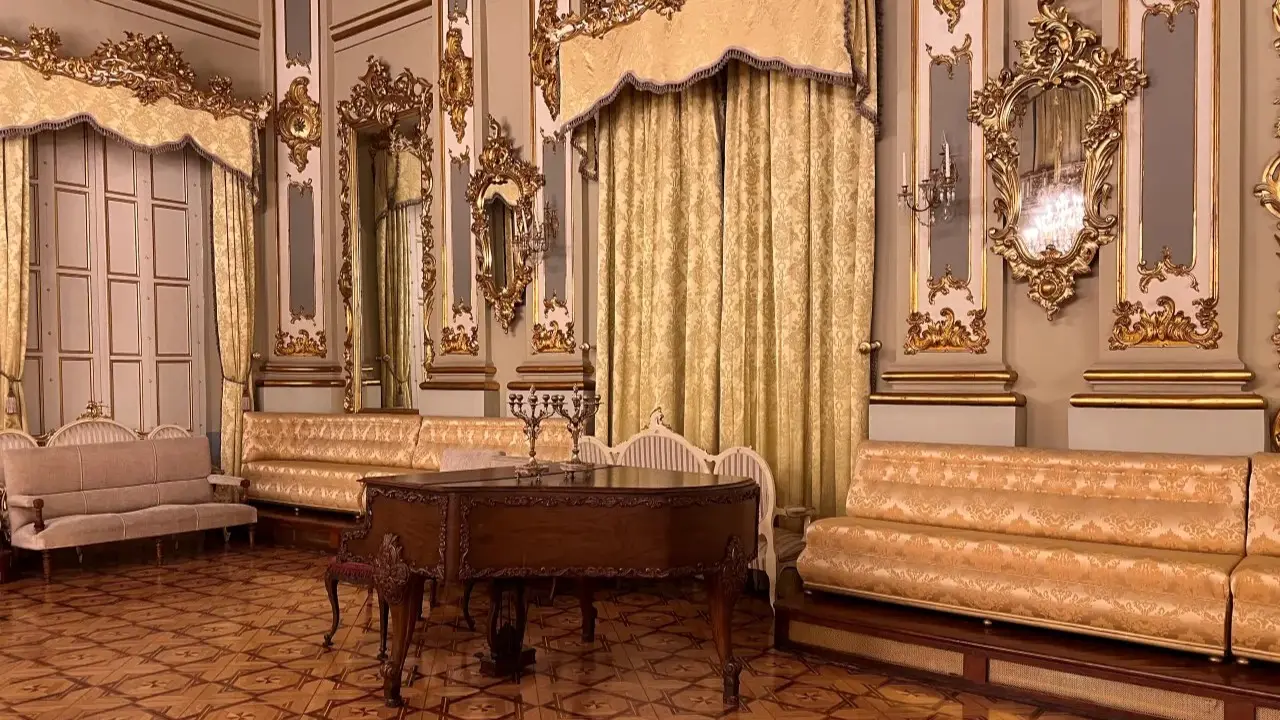
From the Glorieta de España, you can reach the Plaza del Cardenal Belluga in two minutes, where the façade of the Cathedral It unfolds like an altarpiece set on end: it is not intended to be viewed head-on, but to be scanned from bottom to top. Just a step away, on Calle Trapería, the Real Casino de Murcia preserves an Arab patio that imitates the Alhambra, a mirror-and-gold ballroom, an English-style library and a ladies' boudoir with a painted ceiling. It is a nineteenth-century club that is visited today: the bourgeois city looking at itself.
The Murcia that was before: alcazars, mosques and city walls
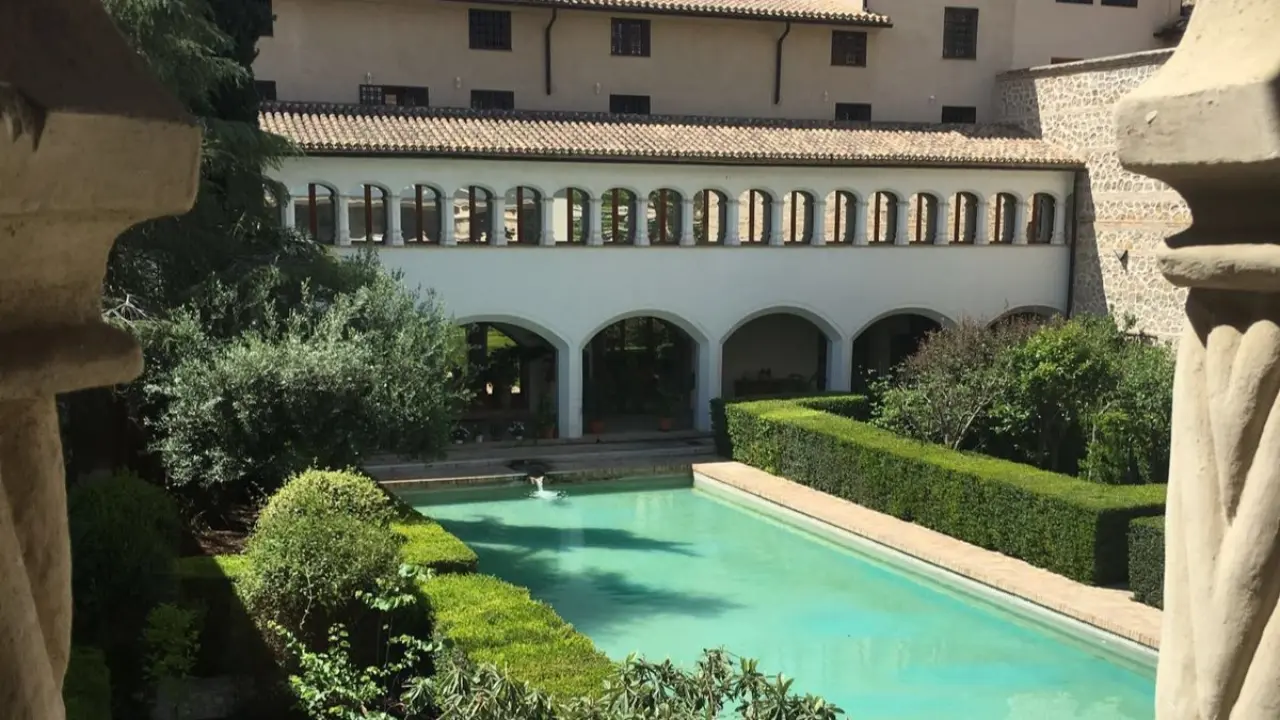
You only have to scratch the surface for the second layer to appear. The San Juan de Dios Monumental Complex occupies the site of the sanctuary that Alfonso X dedicated to the Virgin of Gracia, and beneath this setting, remains of the Muslim Alcázar Mayor are preserved. The most complete example is the Santa Clara Convent Museum: it was an Andalusi palatial residence named Qasr al-Sagir, later a Christian Royal House and finally a convent, without ever being demolished during any of the three changes. And beneath Santa Catalina square there was a mosque before a church.
The Murcia that lives on: the Almudí, the Romea and the river
The third gaze is not in the ashlar masonry, but in its use and what is told. The Palacio del Almudí was born as a granary to control wheat; later it was a cavalry barracks, then a Palace of Justice and today it houses the municipal archive and an art centre. The Verónicas wall, fifty metres away, remained hidden for decades until it came to light once more. And in the Romea Theatre the most Murcian legend of all survives: following several fires, the idea spread that the theatre would burn down three times, the last time while full, and that is where the custom of leaving some seats unsold comes from.
«The Three Gazes of Murcia»: a walking tour turned into a clue hunt
«The Three Gazes of Murcia is a self-guided outdoor experience played on your mobile phone as you walk through the historic quarter. Kei, Escapeo’s virtual guide, arrives in the city believing he is going to see monuments and discovers at the Cathedral that none of them is just one thing. From there, he follows a trail that crosses ten locations and three ways of looking at Murcia: the one in plain sight, the one that lies beneath, and the one that stays alive because someone keeps telling the tale.
The tour asks you to look at facades, at details almost no one looks at twice and at what buildings tell you when you stop taking them for granted. What happens at each stop is not told here, for obvious reasons. Of the end, one sentence can be revealed: upon reaching the Segura, Kei realises that he has not toured one city, but many Murcias at once.
Where to stop for food without leaving your route
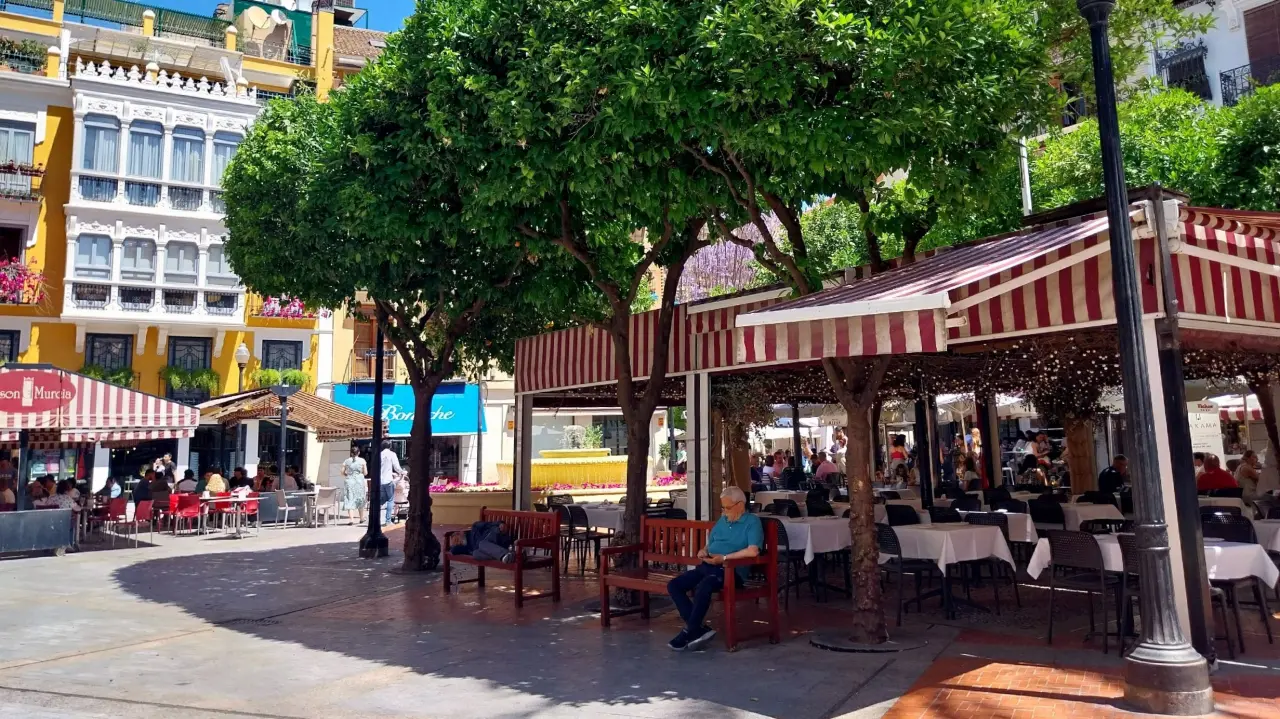
Between the Santa Catalina and Almudí stops is the Plaza de las Flores, the epicentre of Murcian tapas, with the bars' counters set up literally in their windows. Order a marinera — a biscuit topped with Russian salad and an anchovy — and a zarangollo, which is courgette, onion and egg from the allotment. If you finish off with a paparajote, a warning for outsiders: the lemon leaf inside is not eaten. The game is not rushed, so you stop and carry on.
How it works and how long it lasts
- You only need a mobile phone with a connection, comfortable shoes and to be in Murcia. There is no need to download any application.
- The starting point is the Glorieta de España. From there, each location is activated by geolocation upon arrival.
- You can play solo or in a group: if you go as a team, you sync your mobile phones at the start and the score is shared.
- After the purchase you receive an access code. There are no timetables or bookings, you start whenever you want and the voucher does not expire.
- The usual duration is between an hour and a half and two hours, with no strict limit: you can stop to eat or take photos and continue afterwards.
Three detours that the route does not indicate
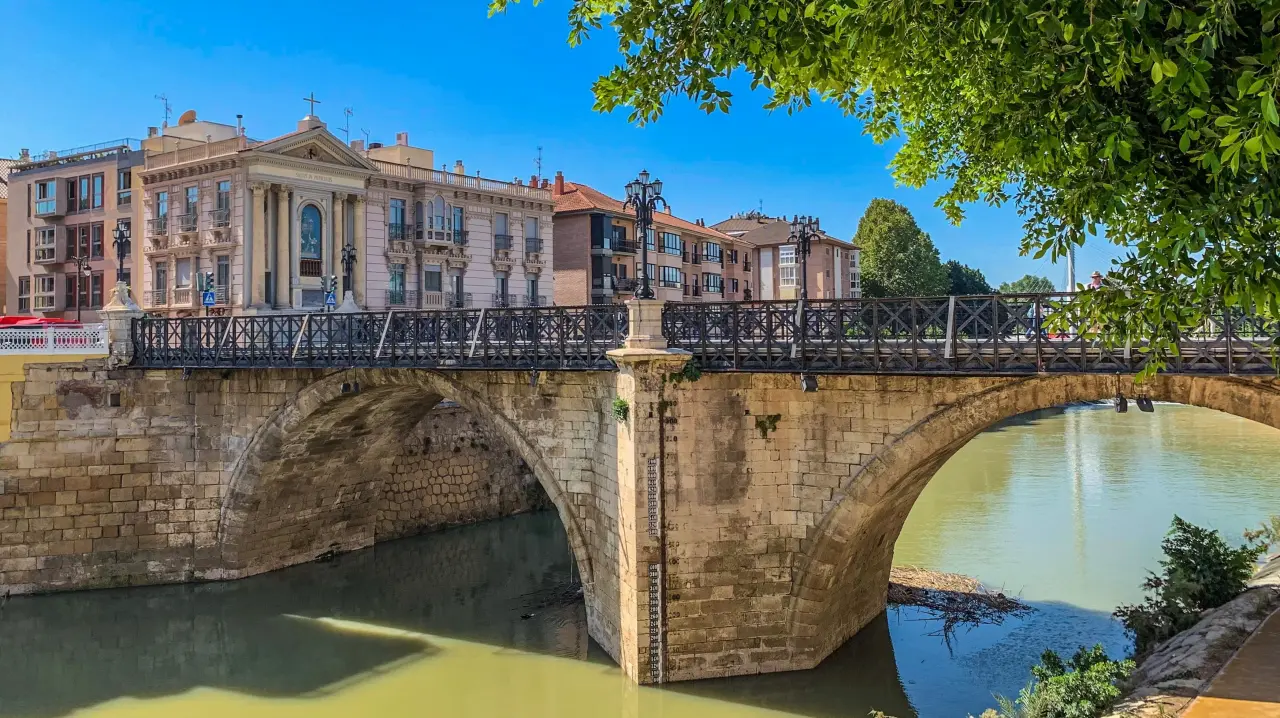
On the central pier of the Bridge of Dangers there is a flood gauge carved into the stone: it marks how high the Segura has reached on its worst days, and the height is astonishing. On Trapería Street, look up above the shop windows, where the signs and bay windows tell of another era. And if you come in summer, cross over to the Malecón Garden when you finish: it is a raised promenade over the old river embankment, and it is the best shade in the city.
A plan for couples, groups and people from Murcia who think they know their city
It works in various formats. As a couple, as an alternative afternoon plan to the usual routine. With friends, because ten stops give plenty of conversation and it's a format that works just as well for hen and stag dos. As a family, if the little ones are already reading by themselves. And for people from Murcia, which is where it's funniest: half the route goes through streets they walk down every day without looking up. You don't need to have ever played anything like it, nor be from here: there is outdoor escape rooms in other cities with the same approach. If you follow the route through the Levante, just over an hour away you have another walk in the same format: escape room in Alicante, from the port to the Basilica of Santa María.
Which of the three Murcias are you going to see?
The city you can see is in any guidebook. The one that was there before has to be searched for underneath. And the one that is still alive only appears if someone tells you about it. Walking the historic quarter with all three at once changes the stroll quite a bit: the Cathedral stops being a facade and the Almudí stops being a pretty building. If you want to explore it like this, reserve your place at the escape room in Murcia: The Three Gazes of Murcia.
Image credits: ballroom of the Real Casino de Murcia, photo by Zandcee. Patio of the Alcázar of the Monastery of Santa Clara, photo by Bertobarc90. Both from Wikimedia Commons under licence CC BY-SA 4.0, resized. Plaza de las Flores, photos by Zarateman (Wikimedia Commons, CC0). Cathedral of Murcia, photo by Ana Hidalgo Burgos, and Puente de los Peligros, photo by José Antonio Otegui Auzmendi (both from Pexels).